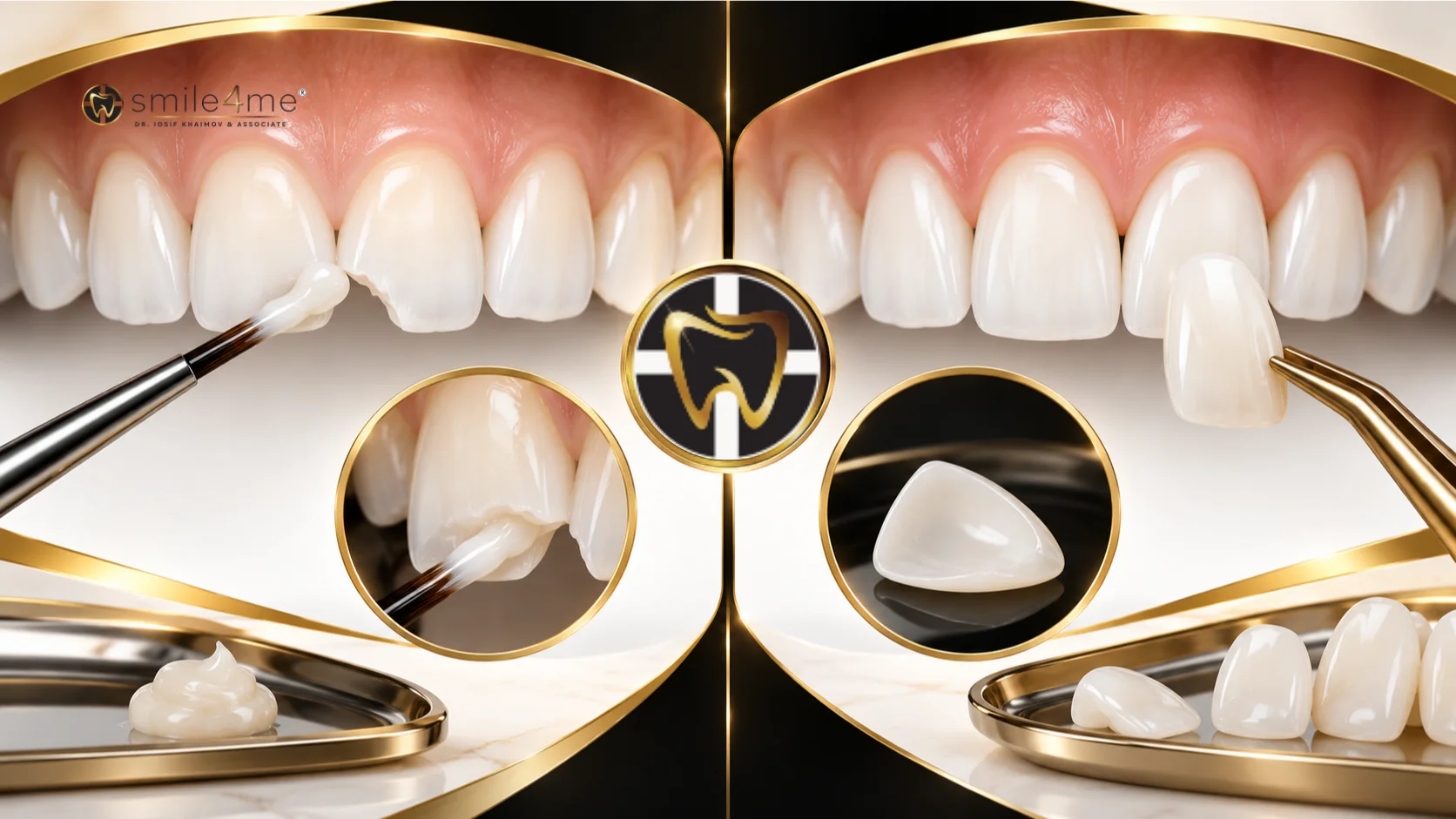
Dental bonding is the faster, cheaper, reversible option that lasts roughly three to seven years, while porcelain veneers cost more and require permanently reshaping the tooth but can last ten to fifteen years or longer. That is the short answer to bonding vs veneers. Which one belongs in your mouth depends on how many teeth you are fixing, how much staining or wear you are dealing with, and whether you want the change to be permanent.
Dr. Iosif Khaimov walks Astoria patients through this decision several times a week at Smile4Me Dental Care, and the conversation almost always comes down to the same handful of trade-offs.
What Dental Bonding Actually Involves
Bonding uses a tooth-colored composite resin that your dentist shapes directly onto the tooth in a single visit. The resin is applied in layers, sculpted by hand to match the surrounding teeth, then hardened with a curing light and polished.
Most cases need no drilling, no anesthetic, and no lab work, so a chipped front tooth can often be repaired in under an hour. Because the natural enamel stays intact, you can remove or redo the bonding later without committing the tooth to anything permanent.
The material itself is the limitation. Composite resin is more porous than porcelain, so it picks up stains from coffee, tea, red wine, and tobacco over time, and it chips more easily under grinding or biting pressure.
What Veneers Actually Involve
A veneer is a thin, custom-made porcelain shell bonded to the front of the tooth, built in a dental lab rather than sculpted in the chair.
Getting veneers takes two or more appointments. Dr. Khaimov removes a small amount of enamel so the shell sits flush with your natural teeth, takes impressions or a digital scan, and fits temporaries while the lab fabricates the final restorations. That enamel does not grow back, which makes veneers a permanent commitment.
What you get in exchange is a material that behaves far more like natural tooth structure. Porcelain resists staining, holds its polish for years, and reflects light in a way composite resin cannot quite match. A study of enamel-bonded veneers reported survival and success rates near 99 percent, with a range of 98 to 100 percent, which is among the strongest longevity data in restorative dentistry.
Bonding vs Veneers: The Key Differences
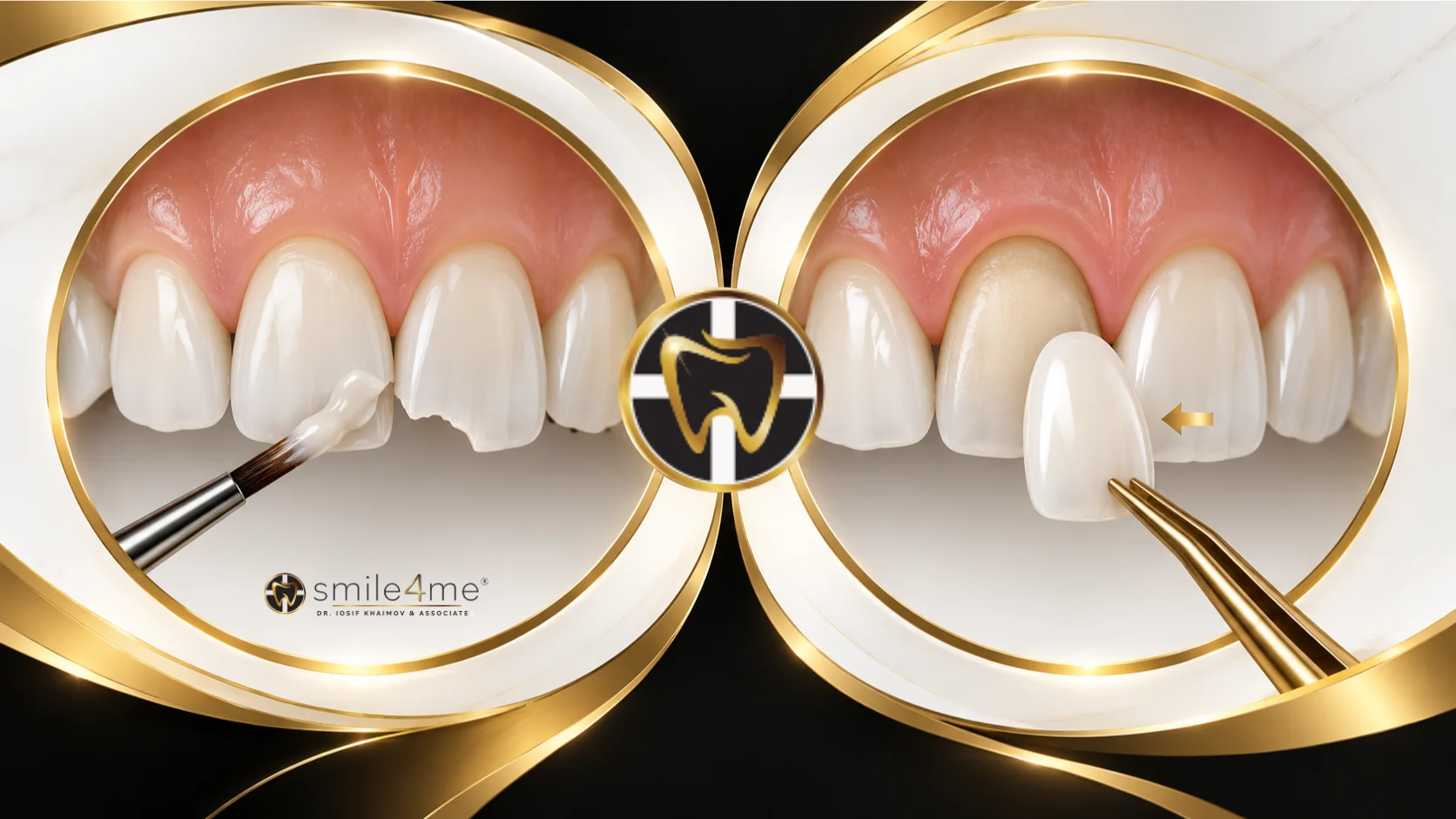
Comparing the two across the same factors makes the trade-off much easier to see than comparing them one at a time.
Factor | Dental Bonding | Porcelain Veneers |
Relative cost per tooth | Lower | Higher |
Typical lifespan | 3–7 years | 10–15+ years |
Appointments needed | Usually one | Two or more |
Enamel removal | Minimal to none | Required |
Reversible | Yes | No |
Stain resistance | Moderate | High |
Chip resistance | Moderate | High |
Best for | One or two small flaws | Full smile makeovers |
Repair if damaged | Patched in-office | Usually replaced |
Anesthetic | Rarely needed | Often used |
Cost per year of wear is where the comparison often flips. Bonding is cheaper on the day of treatment, but replacing or repairing it every few years narrows the gap considerably over a decade.
When Bonding Is the Better Choice
Bonding tends to win when the problem is small, local, and not driven by staining.
A Single Chipped or Cracked Tooth: One damaged front tooth surrounded by healthy, well-shaded neighbors is the textbook bonding case, since matching one tooth is easier than rebuilding a whole arch.
Minor Gaps and Uneven Edges: Small spaces between teeth and slightly short or jagged edges can be filled and reshaped with resin in one appointment.
Younger Patients: Teeth that are still shifting, or patients who may want a different result in ten years, benefit from an option that leaves the enamel untouched.
Testing a Cosmetic Change: Bonding can preview a new tooth shape before you commit to permanent enamel removal.
If the chip came from an accident and the tooth is sensitive, painful, or bleeding, that is not a cosmetic appointment yet. Seeing an emergency dentist in Astoria first rules out nerve damage or a fracture below the gum line, and the cosmetic repair follows once the tooth is stable.
When Veneers Are Worth It
Veneers make more sense once the goal moves from repair to redesign.
Deep or Permanent Discoloration: Intrinsic stains from tetracycline, trauma, or aging do not respond to whitening, and porcelain covers what bleaching cannot reach.
Multiple Teeth Across the Smile Line: Treating six to ten teeth at once lets the lab build symmetry and shade consistency that hand-sculpted resin struggles to hold.
Heavy Wear or Erosion: Teeth worn down by grinding or acid erosion need coverage with real structural strength.
Long-Term Value: Patients who do not want to revisit the same tooth every few years usually prefer paying once for a restoration measured in decades.
Our dental veneers in Astoria are planned around your bite and facial proportions, not just tooth color, which is what separates a natural result from an obvious one. For patients weighing broader restorative work, the comparison between dental implants and veneers covers a different question entirely: replacing missing teeth versus resurfacing the ones you still have.
Why Astoria Patients Choose Smile4Me for Cosmetic Work
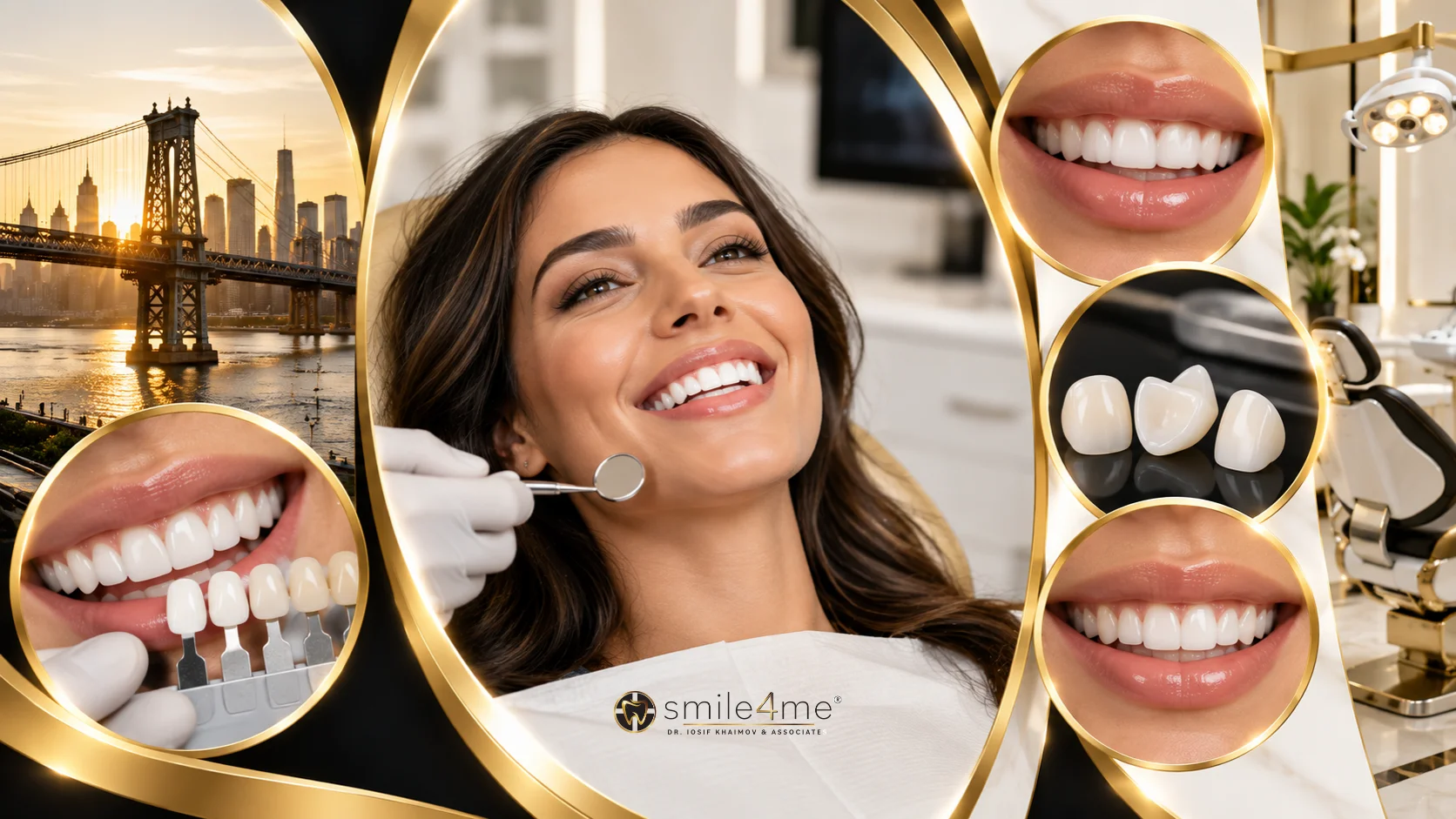
Cosmetic dentistry is a judgment call as much as a procedure, and the practice you pick shapes the result more than the material does. That judgment comes from experience: Dr. Khaimov graduated from New York University College of Dentistry and spent more than seven years treating patients across New York City practices before opening Smile4Me on Steinway Street, where cosmetic cases now come through the office every week, and continuing education seminars keep him current on materials and techniques.
Both Options Done In-House
Smile4Me Dental Care handles bonding and veneers under one roof, along with whitening, crowns, and the restorative work that sometimes has to come first. Patients rarely get sent elsewhere mid-treatment, which keeps the plan and the shade matching in one set of hands.
Treatment Planned Around Your Bite
Dr. Iosif Khaimov examines enamel thickness, wear patterns, and how your teeth meet before recommending either option. A patient who grinds at night gets a different answer than a patient with a single chipped incisor, even when both walk in asking for veneers.
Financing That Makes the Longer-Lasting Option Realistic
Cost pushes plenty of patients toward the cheaper short-term fix. Financing with up to two years at 0% interest removes that pressure, so the decision comes down to what actually suits your teeth rather than what fits this month's budget.
Talk Through Bonding vs Veneers With an Astoria Dentist
The right answer to bonding vs veneers comes from an exam, not an article. Dr. Khaimov will look at your enamel thickness, bite, staining pattern, and how many teeth are involved, then lay out what each option would realistically cost and how long it should last for you specifically.
Smile4Me Dental Care is on Steinway Street, five minutes from the R and M trains, and consultations include a full financing breakdown so you can see both paths clearly. As a dentist in Astoria treating cosmetic cases in this neighborhood daily, our team can tell you which option we would recommend for your teeth and why.
Book an appointment online, or call (718) 400-4400 to schedule your cosmetic consultation.
FAQs About Veneers vs Bonding
Which lasts longer, bonding or veneers?
Veneers last considerably longer. Porcelain veneers commonly hold up ten to fifteen years and often longer with good hygiene, while composite bonding typically needs repair or replacement within three to seven years.
Is dental bonding reversible?
Yes. Bonding usually requires little or no enamel removal, so you can polish off the resin and return the tooth close to its original state. Veneers are not reversible, because the enamel removed during preparation cannot be replaced.
Which resists stains better?
Porcelain resists staining far better than composite resin. Bonded teeth gradually darken with coffee, tea, red wine, and smoking, and professional whitening does not lighten composite material once it has stained.
Can you have both bonding and veneers?
Many patients do. Veneers often cover the most visible front teeth while bonding handles smaller repairs on teeth further back, and Dr. Khaimov frequently combines the two to keep treatment focused on the teeth that actually need it.