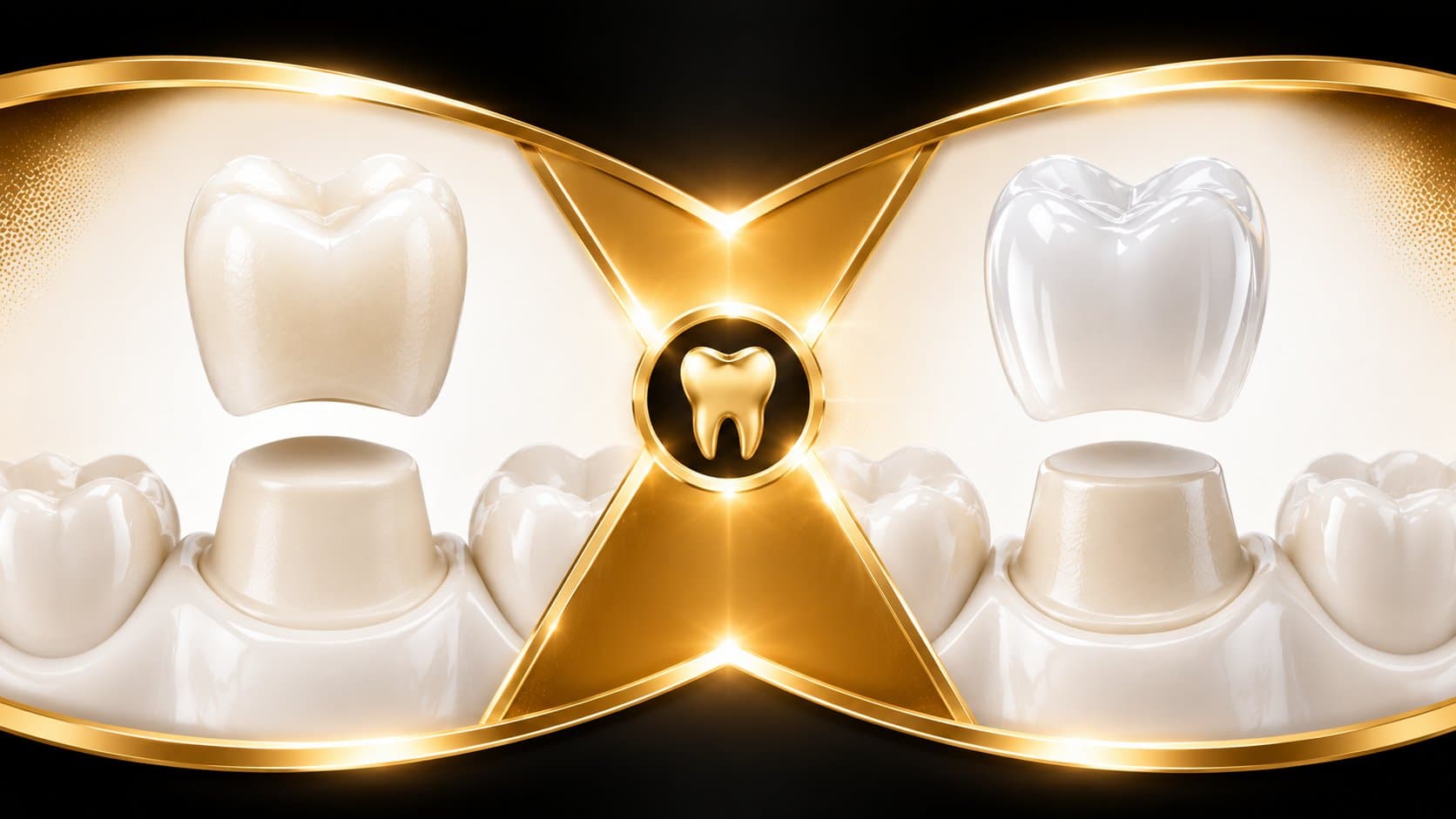
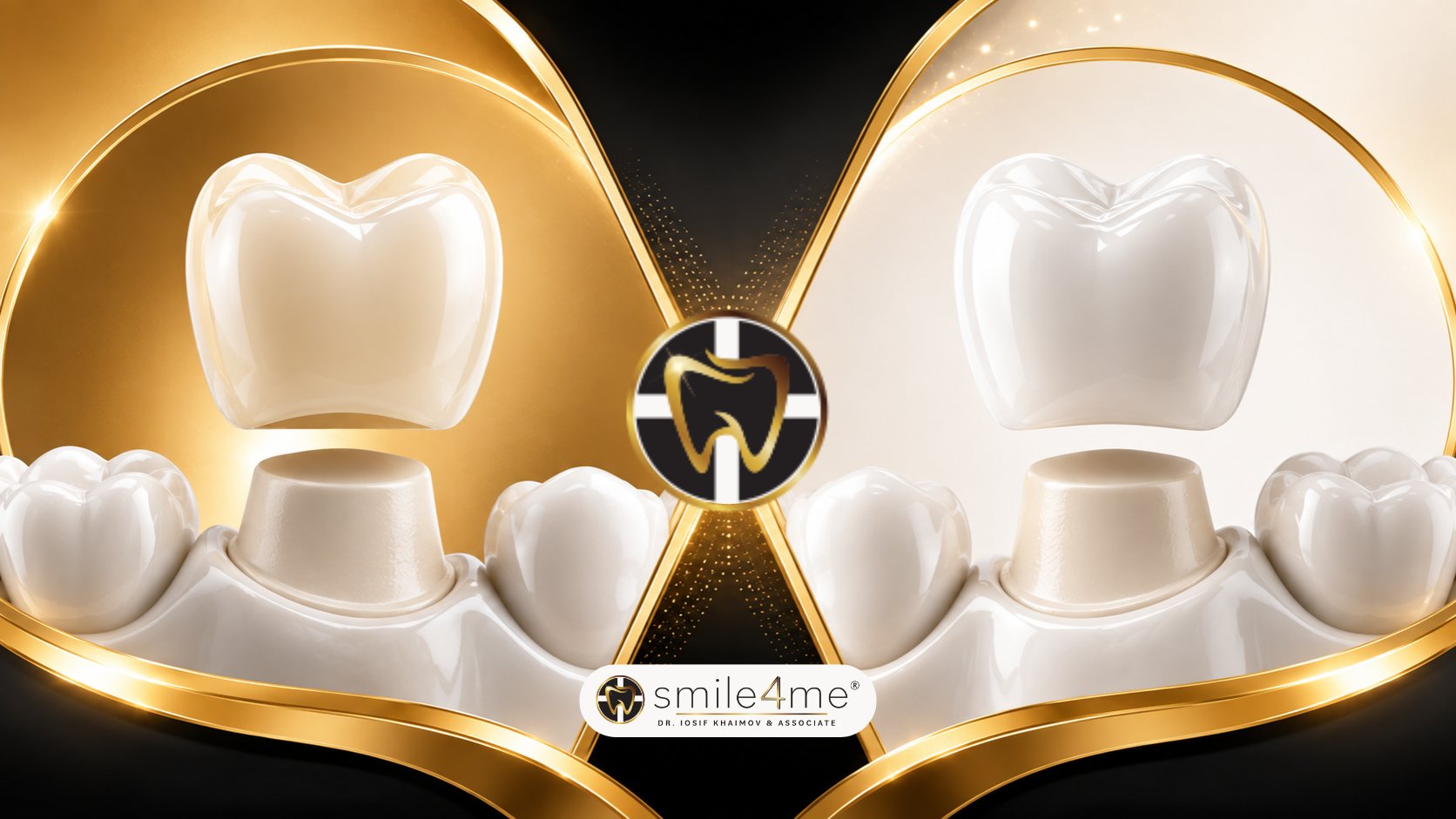
When comparing a ceramic crown vs porcelain crown, the biggest difference comes down to what the crown is made of and how that affects its strength, appearance, and longevity in your mouth. Both are popular choices for restoring damaged or weakened teeth, and both terms get used almost interchangeably by patients, but understanding the real differences can help you make a more confident decision with your dentist.
At Smile4Me Dental Care in Astoria, we help patients with the best ceramic crowns Queens has to offer because they always fit their needs, their budget, and their long-term oral health goals.
What Are Dental Crowns and Why Does Material Matter?
A dental crown is a tooth-shaped cap placed over a damaged, decayed, or structurally weakened tooth to restore its function and appearance. Crowns are commonly placed after root canal treatment to protect the treated tooth from future fracture. The range of available crown materials includes metal alloys, porcelain-fused-to-metal (PFM), all-ceramic, all-porcelain, and zirconia, each with distinct properties.
Material choice is not just cosmetic preference. It directly affects how natural your crown looks, how long it lasts, whether it triggers sensitivity, and what it costs over time. Choosing the right material upfront means fewer complications and a better match for your bite, bone structure, and lifestyle. That's why understanding your options before you sit in the chair is genuinely useful.
What Is a Ceramic Crown?
A ceramic crown is made entirely of ceramic, often zirconia or a glass-based ceramic, with no metal underneath. This gives it a natural, tooth-like translucency, making it a popular choice for front teeth and other visible areas of the smile. Zirconia crowns are also strong enough to withstand the forces on back teeth, which is why ceramic has become a widely recommended option for both.
What Is a Porcelain Crown?
"Porcelain crown" often causes confusion, since it can refer to either an all-porcelain crown or, more commonly, a porcelain-fused-to-metal (PFM) crown, a metal base covered by a tooth-colored porcelain layer. PFM crowns combine metal's strength with a natural-looking surface, and they've been a dependable choice for molars and other heavy-chewing teeth for decades.
Key Differences Between Ceramic and Porcelain Crowns
Choosing between crown types requires comparing them against criteria that actually affect your daily life and long-term dental health.
Factor | All-Ceramic Crown | Porcelain-Fused-to-Metal Crown |
Material | 100% ceramic, no metal | Metal base with a porcelain layer |
Appearance | Natural, translucent | Slightly more opaque; may show a gray line at the gumline over time |
Best For | Front teeth, visible smile areas | Molars and teeth under heavy bite force |
Metal Sensitivity | Safe for patients avoiding metal | Contains a metal substructure |
Cost | Higher upfront investment | More budget-friendly |
Pros and Cons of Ceramic Crowns
Pros:
Natural appearance: Ceramic crowns blend in with surrounding teeth better than almost any other crown type, making them a strong choice for front teeth.
No metal exposure: Without a metal base, there's no risk of a gray line showing at the gumline as gums shift over time.
Strong long-term performance: Research on all-ceramic crowns has shown a 95% success rate over periods of up to 15 years.
Biocompatibility: Ceramic is a good option for patients who prefer to avoid metal in their mouth.
Cons:
More brittle under pressure: All-ceramic crowns can be more prone to chipping than metal-supported options in certain high-pressure bite situations.
Higher upfront cost: Ceramic crowns tend to cost more than traditional porcelain-fused-to-metal crowns, which is a factor worth discussing with your dentist.
Pros and Cons of Porcelain Crowns
Pros:
Proven durability: The metal core in a PFM crown adds structural support, which can be especially useful for molars that handle heavy chewing forces.
Established track record: Porcelain-fused-to-metal crowns have been used successfully in dentistry for many years, supported by a long history of clinical data.
Cost accessibility: PFM crowns are often more budget-friendly than premium all-ceramic options, particularly for back teeth where appearance is less of a priority.
Versatility: This crown type works well across a wide range of cases, from single-tooth repairs to multi-crown treatment plans.
Cons:
Visible gray line risk: The metal base can become visible as a dark line near the gum over time, particularly if gum tissue recedes.
More natural tooth reduction: These crowns require more of the natural tooth to be filed down than some all-ceramic options, since the metal substructure adds bulk that has to be accounted for during preparation.
Which Crown Material Lasts Longer?
In one clinical study that tracked crowns over a mean follow-up of 3 years, the overall failure rate was 8.5%. Zirconia crowns failed at a slightly lower rate (6.7%) than metal-ceramic crowns (9.8%), though researchers found no statistically significant difference between the two, so neither material has a clear, proven edge based on this data alone. What tends to matter more is placement, bite force, and how well the crown is cared for. A back molar crown faces different demands than a front-tooth crown, and your dentist can help match the right material to the right tooth.
How to Choose the Right Crown Material
The right choice between ceramic and porcelain usually comes down to a few factors:
Tooth location: Front teeth tend to benefit most from all-ceramic crowns because of their natural translucency.
Visibility: The more visible the tooth, the more appearance should factor into your decision.
Budget: PFM crowns may be the more practical choice for back teeth where cost outweighs cosmetics.
Metal sensitivity: Patients with known sensitivities are usually better suited to all-ceramic options.
How Smile4Me Dental Care Can Help
Choosing between a ceramic crown and a porcelain crown isn't a decision you have to make alone. Dr. Iosif Khaimov, a graduate of NYU College of Dentistry with over 7 years of hands-on patient care experience, evaluates each case individually, considering the tooth's location, your bite, your budget, and your aesthetic goals before recommending a crown material.
In-house expertise: We handle crown placement and restorative care directly, so you rarely need an outside referral.
Modern technology: Our advanced equipment helps us match the right material to the right tooth with precision.
Flexible financing: Up to two years of no-interest payments make quality crowns accessible without compromising on the material that's best for you.
Local, personalized care: As your dentist in Astoria, we can see you for consultations, placement, and follow-up care, all in one convenient location.
Ready to Restore Your Smile?
Whether you're deciding between an all-ceramic crown or a porcelain-fused-to-metal restoration, our Astoria team is here to help you choose with confidence. Book an appointment with Smile4Me Dental Care today, or call us at (718) 400-4400 to get started.
FAQs About Ceramic vs Porcelain Crowns
What Should I Do If My Crown Cracks or Falls Out?
A missing or broken crown exposes the tooth underneath and should be treated as a dental emergency. If this happens to you, don't wait; contact our team for emergency dental treatment in Astoria as soon as possible so we can protect the tooth and get you back to normal.
How Do I Know Which Crown Is Best for My Situation?
The best way to know for sure is a conversation with your dentist. We'll look at your specific tooth, your bite, and your goals before making a recommendation tailored to you.
Are Ceramic Crowns More Expensive Than Porcelain Crowns?
Generally, yes. All-ceramic crowns cost more upfront due to material and lab costs, while porcelain-fused-to-metal crowns are typically more budget-friendly; though financing can close that gap for either option.