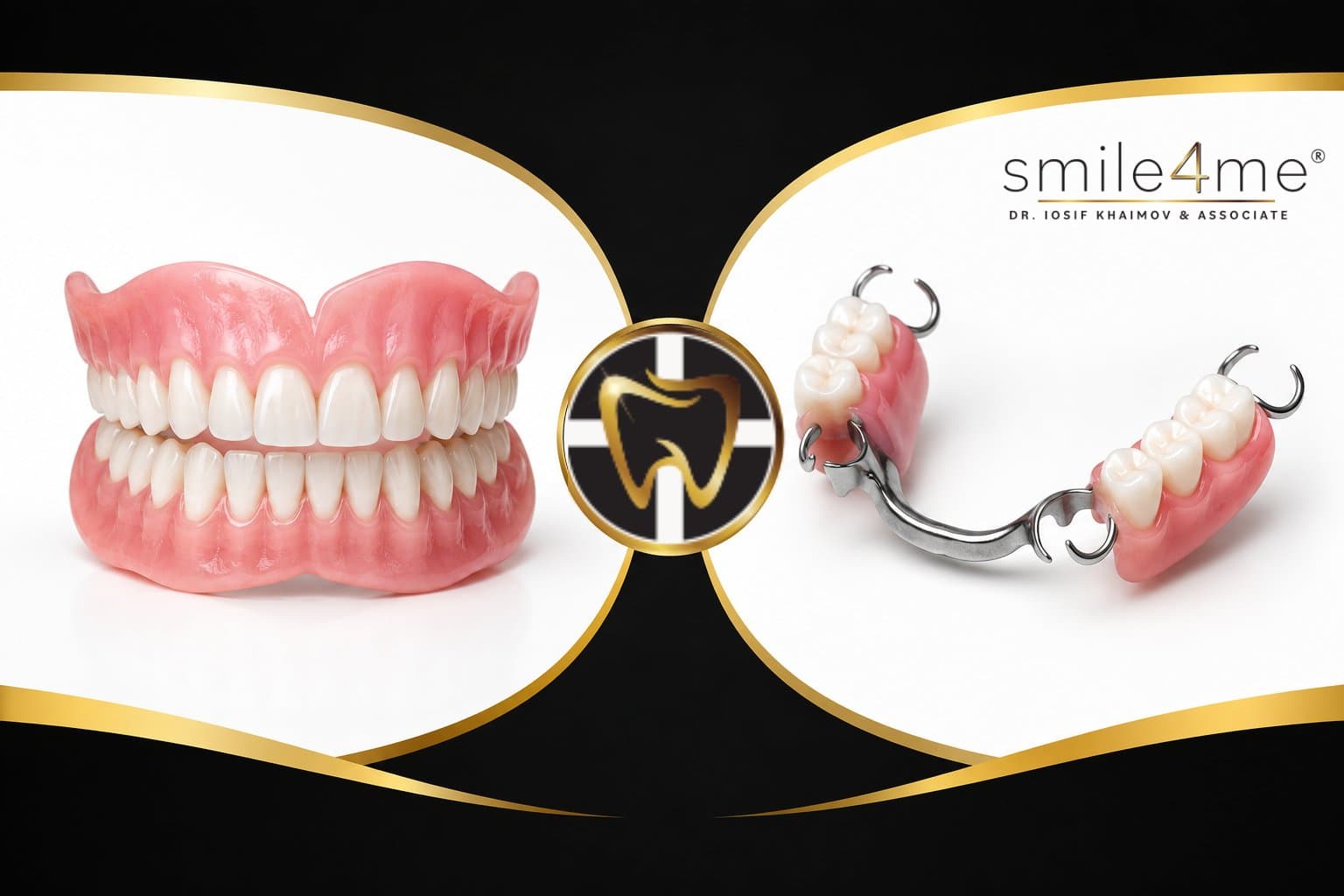
Full dentures replace every tooth in an arch, while partial dentures fill gaps around the teeth you still have. Choosing between full dentures vs partial dentures comes down to how many natural teeth remain, your budget, and your mouth's current shape. At Smile4Me Dental Care, we help Astoria patients make this call every week, and the right answer is rarely the same for two people.
What Are Full Dentures?
Full dentures, also called complete dentures, replace every tooth in an upper or lower arch. They rest directly on the gums and stay in place with suction, adhesive, or a denture-supported implant. Patients typically need full dentures after losing most or all of their natural teeth to decay, gum disease, or injury.
Modern full dentures are custom-fitted to your mouth's shape, so they look more natural than older versions. Many patients also pair full dentures with dental implants for added stability; a combination we regularly recommend for patients who want a denture that won't shift while eating or speaking.
What Are Partial Dentures?
Partial dentures fill in one or more gaps while working around teeth you still have. They typically use a metal or flexible framework that clips onto neighboring teeth, sometimes with clasps or precision attachments for a more secure fit.
Partial dentures make sense when you still have healthy teeth that can anchor the appliance. They also help prevent your remaining teeth from shifting out of position, which can happen naturally when gaps go unaddressed for too long.
Full Dentures vs Partial Dentures: Side-by-Side Comparison
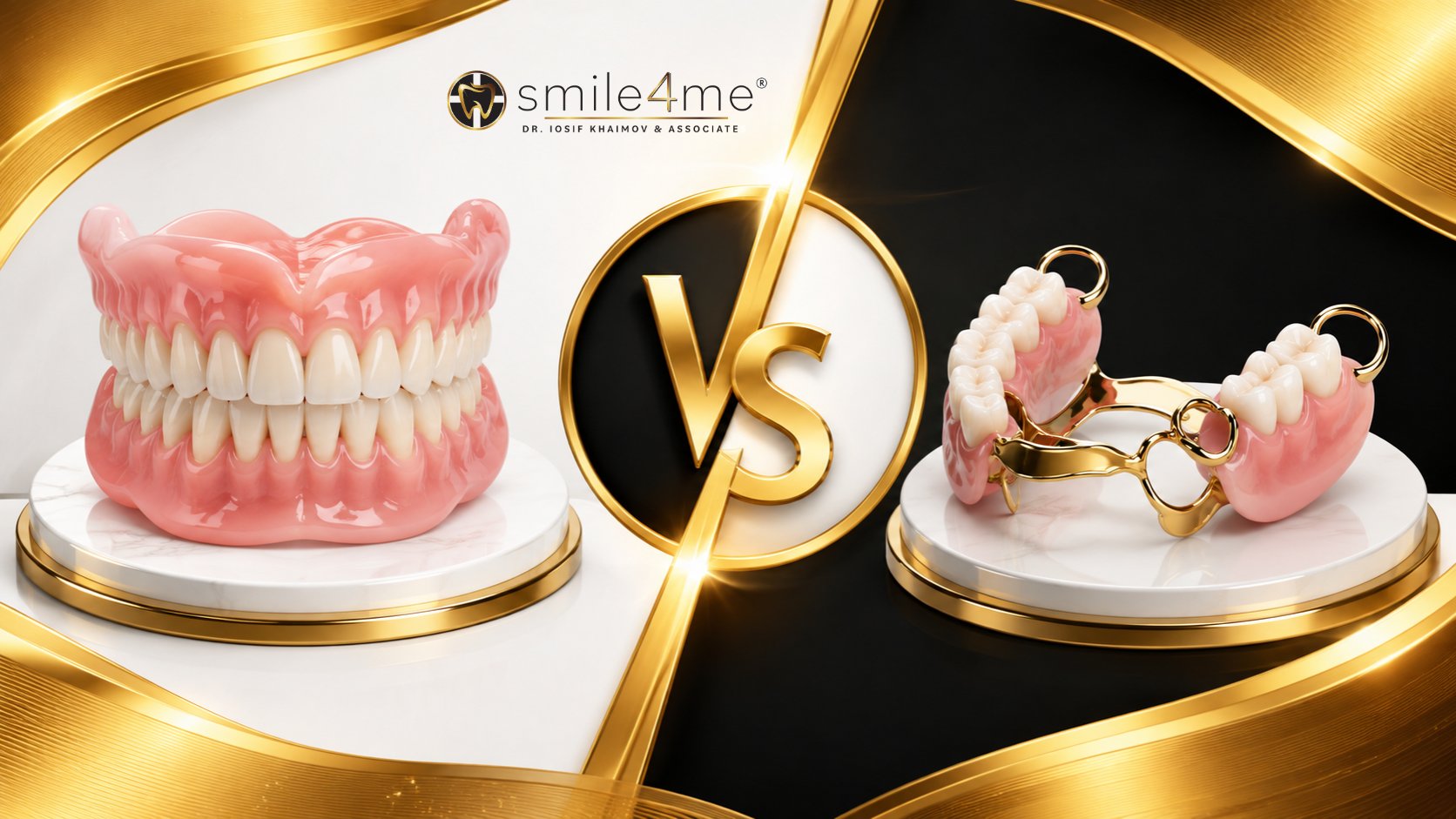
Every case is different, but a few core factors consistently separate the two options, from how they're supported in the mouth to how they affect your remaining natural teeth over time.
Factor | Full Dentures | Partial Dentures |
Best for | Patients missing most or all teeth in an arch | Patients with several healthy teeth remaining |
Support | Gums, suction, adhesive, or implants | Clasps/framework anchored to remaining teeth |
Adjustment period | Longer; the mouth relearns full function | Shorter; natural teeth aid stability |
Effect on remaining teeth | Not applicable | Helps prevent shifting of natural teeth |
Removability | Removed daily for cleaning | Removed daily for cleaning |
Long-term maintenance | Relines needed as gums change shape | Adjustments needed as bite changes |
Speech and eating adjustment | Noticeable initially, improves with practice | Minimal, since natural teeth remain |
Upgrade potential | Can be implant-supported for added stability | Can transition to full dentures later if needed |
When Full Dentures Are the Better Choice
Full dentures are often the right fit when most or all of the teeth in an arch are already missing or beyond saving. If your dentist has told you that extractions are unavoidable, full dentures can give you a complete, functional smile once healing is complete.
Patients who choose full dentures often want:
A permanent solution: No remaining teeth to maintain or worry about failing later.
Consistent appearance: A full arch replacement, rather than a patchwork of natural and artificial teeth.
Implant compatibility: Full dentures can be secured with implants for a stronger, more stable fit.
When Partial Dentures Are the Better Choice
Partial dentures work best when you have healthy teeth that can support the framework and don't need to be removed. Preserving those natural teeth also helps protect your jawbone, since natural tooth roots continue to stimulate the bone in a way a full denture cannot.
Partial dentures are usually the better fit if you:
Have several strong, healthy teeth: These anchor the partial and keep it secure.
Want to avoid unnecessary extractions: Removing healthy teeth just to fit a full denture isn't usually recommended.
Need a faster adjustment: Because natural teeth remain, chewing and speaking feel more familiar right away.
Can You Switch From Partial to Full Dentures Later?
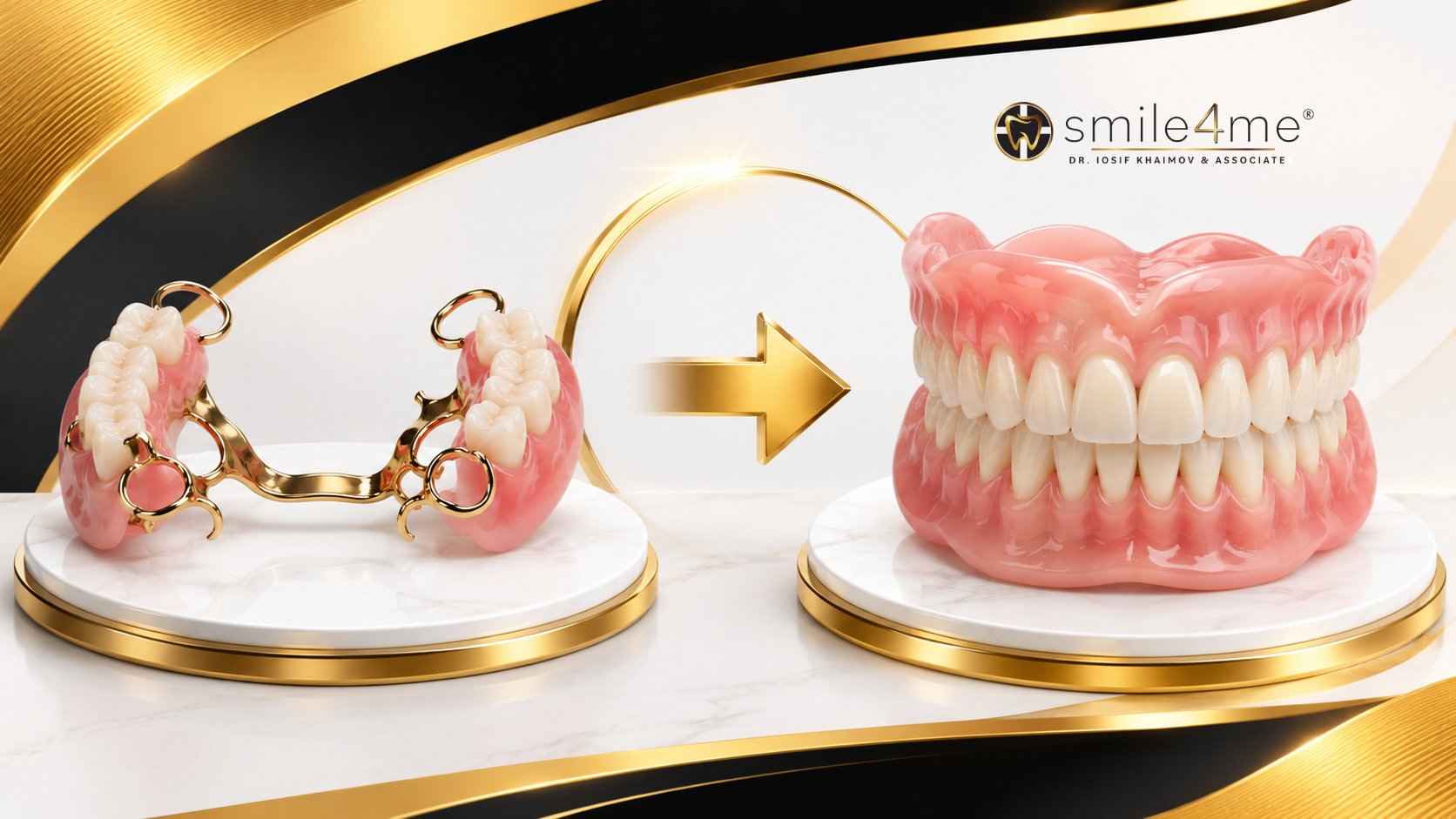
Yes. Many patients start with partial dentures and move to full dentures years later if remaining teeth eventually need to be removed. This is a normal part of long-term dental care, and it's one reason we recommend regular checkups; catching problems early can extend the life of your natural teeth and delay that transition.
Which Denture Is Right for You?
The right choice depends on your mouth's current condition and what matters most to you day to day. A full oral exam in Astoria is the only reliable way to know for sure, but these factors give you a good starting point:
Number of remaining healthy teeth: More natural teeth generally point toward a partial denture, while few or none point toward a full denture.
Gum and jawbone health: Weaker bone or gum support may affect how securely an option fits and how long it lasts.
Bite alignment: How your upper and lower teeth meet affects comfort and function in both options.
Adjustment timeline: Partial dentures usually feel familiar faster, while full dentures take longer to get used to.
Long-term goals: Whether you want a permanent solution now or would rather preserve remaining natural teeth for as long as possible.
Budget and financing needs: Both options cost differently over time, and financing can make either more manageable.
We walk through each of these during a consultation so the recommendation fits your specific situation, not a generic answer.
Smile4Me Dental Care: Your Partner in Choosing the Right Denture in Queens
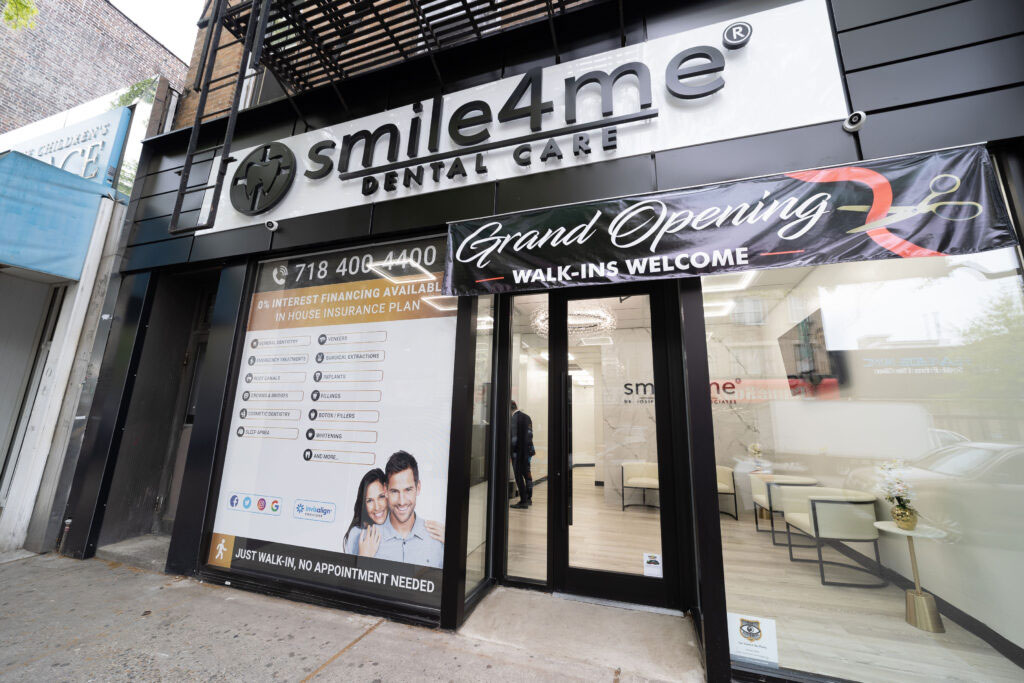
You shouldn't have to figure out whether to choose full or partial dentures on your own. As a trusted dentist in Astoria, we guide patients through every part of that decision, from the initial exam to the final fit.
A Treatment Plan Based on Your Mouth, Not a Template
Dr. Iosif Khaimov, a graduate of the NYU College of Dentistry with more than seven years of hands-on patient care, evaluates your remaining teeth, gum health, and jawbone structure before recommending either option. That means the recommendation is based on what your mouth actually needs, not a one-size-fits-all approach.
Comprehensive Care Without Outside Referrals
We handle the entire process in-house, from the initial exam through fitting and adjustments. This means patients who need dentures in Astoria rarely need to see an outside specialist to complete their treatment.
Financing That Makes Dentures Accessible
Dentures are a significant investment, so we offer up to 2 years of interest-free financing. A stronger, more complete smile shouldn't have to wait, and this option lets patients move forward without compromising on quality.
Fast Support When Something Goes Wrong
Denture problems don't always happen on schedule. If a crack, poor fit, or ongoing discomfort comes up unexpectedly, our team is set up to see patients quickly rather than making them wait weeks for an opening.
Get Started With Full or Partial Dentures in Astoria
Full and partial dentures both restore your ability to chew, speak, and smile with confidence; the right option depends on how many natural teeth you have left and what your mouth needs to function well long-term. A thorough exam is the only way to know for sure, and that's exactly where our team can help.
If a broken or missing tooth is causing pain right now, don't wait for a scheduled visit; reach out for emergency dental treatment in Astoria the same day you notice a problem. We're ready to help you decide between full and partial dentures.
Call (718) 400-4400 or book an appointment online to schedule your consultation.
FAQs About Full vs Partial Dentures
Are full dentures more comfortable than partial dentures?
Comfort depends on fit, not type. Full dentures take longer to adjust to because your mouth is relearning how to function without any natural teeth. Partial dentures usually feel familiar faster because your remaining teeth help guide biting and speaking. In one study of digitally fabricated complete dentures, about three out of four patients reported overall satisfaction with their results, underscoring how much a precise fit matters.
How long do dentures last?
Most dentures last five to ten years with proper care, though your mouth naturally changes shape over time, which can affect fit. Regular checkups let us catch those changes early and adjust or reline your denture before it becomes uncomfortable.
Do dentures hurt at first?
Some soreness or irritation during the first couple of weeks is normal as your gums adjust. It should ease as your mouth adapts, and if discomfort persists, an adjustment usually resolves it.
Can you sleep in dentures?
We recommend removing them at night. This gives your gums a chance to rest and lowers the risk of irritation or infection, and soaking them overnight helps them keep their shape.
How do you clean full or partial dentures?
Rinse them after eating, brush daily with a denture-specific cleaner, and soak them overnight. Regular toothpaste can be too abrasive, so it's best to avoid it.