
Most Invisalign patients change their trays every one to two weeks, though the exact pace depends on your treatment plan and how well your teeth respond to each set. Invisalign moves your teeth gradually, and each new tray applies slightly more pressure to guide your smile toward its final position.
So how often are Invisalign trays changed? It varies by case and depends on your treatment plan, your dentist's recommendations, and how consistently you wear each set. We'll walk through the standard schedule, what can speed up or slow down your timeline, and how to know when it's time to switch to your next set.
How Invisalign Trays Work
Invisalign uses a series of custom, clear aligner trays designed as one complete treatment plan. Each tray shifts your teeth by a small, precise amount. Once your teeth match the current tray's shape, you move on to the next one in the sequence.
This step-by-step process is why timing matters. Moving too fast can put pressure on teeth that aren't ready yet, while waiting too long can slow your progress. Dr. Iosif Khaimov of Smile4Me Dental Care in Astoria notes that sticking to the recommended schedule is one of the simplest ways patients can keep their treatment on target.
The Standard Schedule for Changing Invisalign Trays
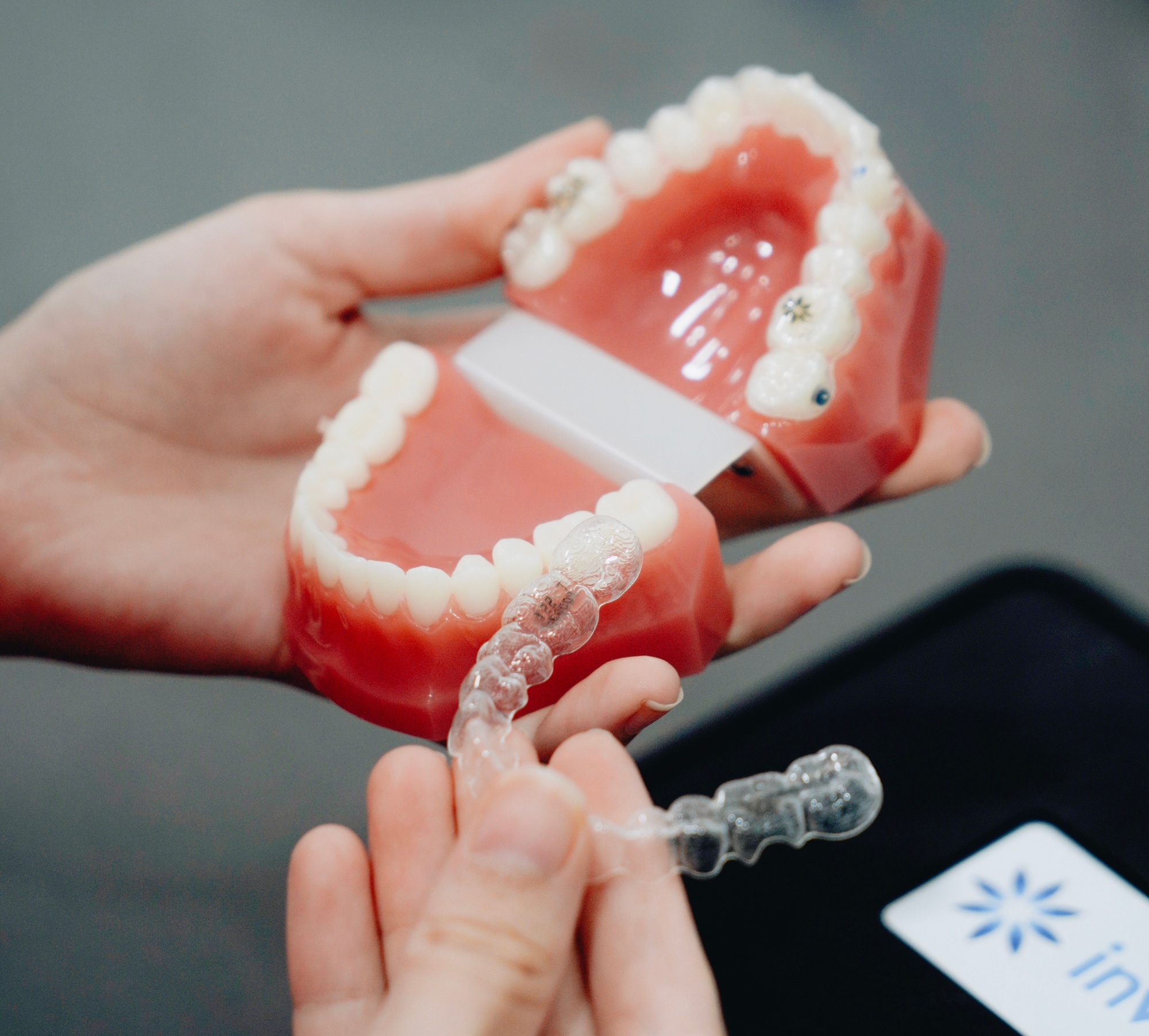
For most patients, the standard schedule for changing Invisalign trays falls somewhere between one and two weeks per set. Many newer Invisalign patients are placed on a seven-day schedule, since current aligner materials are designed to shift teeth gradually and comfortably within that window.
That said, how often you should change Invisalign trays is never one-size-fits-all. Your orthodontist or dentist sets your specific schedule based on:
Case complexity: More involved bite corrections often call for a longer interval between trays, giving teeth extra time to settle.
Tooth movement type: Simple movements, like small gaps or minor crowding, may progress on a faster schedule than rotations or bite corrections.
Provider recommendation: Your treating dentist reviews your progress at check-ins and can adjust your schedule if needed.
Following the schedule your dentist sets, rather than a generic online recommendation, gives you the most predictable results.
Factors That Affect How Often You Change Trays
A few key factors influence how often Invisalign trays are changed for any individual case.
Treatment complexity: Straightforward cases with minor spacing issues often move through trays faster than cases involving significant crowding or jaw alignment issues.
Wear time compliance: Invisalign trays need 20 to 22 hours of wear per day to work as planned. Patients who consistently hit that number tend to stay on schedule, while inconsistent wear can slow tooth movement and delay a switch.
Age and bone density: Younger patients and those with more responsive bone structure sometimes see faster tooth movement, which can factor into how their schedule is set.
Attachment use: Small tooth-colored attachments help trays grip certain teeth for more complex movements, and cases using attachments may follow a different pace than simpler cases.
Because these factors vary from patient to patient, two people with Invisalign can be on very different schedules, and both progress normally.
Signs You're Ready for Your Next Set of Trays

Most patients get a general sense of when to change Invisalign trays just by paying attention to fit and comfort. Common signs include:
A looser feeling tray: Your current tray starts to feel slightly loose rather than snug against your teeth.
Minimal or no pressure: The tight, achy feeling from a new tray has faded, meaning your teeth have mostly caught up to that stage.
A tray that seats easily: Snapping the tray into place no longer takes extra effort or produces resistance.
If your current tray still feels tight or difficult to seat fully, that usually means your teeth need more time before switching to the next set.
What Happens If You Switch Trays Too Early or Too Late
Moving ahead of schedule is generally discouraged, since it can force teeth to shift before they're ready, leading to trays that don't seat properly or unnecessary discomfort. In some cases, switching too early can actually slow overall progress rather than speed it up.
Waiting too long between trays isn't ideal either. Once your teeth have finished the movement planned for that tray, holding off on the next one just delays your treatment timeline without adding any benefit. This is why Smile4Me recommends changing trays only on the schedule provided during your consultation, and reaching out if a tray ever feels unusually tight, loose, or uncomfortable.
Research on clear aligner outcomes supports this. A study on Invisalign treatment found that following a structured plan is associated with strong results, with roughly 88% of Invisalign cases reaching a successful outcome, comparable to the 90% success rate seen with traditional braces. Staying consistent with your schedule helps make that outcome achievable.
What to Expect During a Tray Transition
Switching to a new tray usually brings a day or two of mild pressure or tightness as your teeth begin adjusting to the next stage. This is normal and typically fades on its own. A few tips can make transitions smoother:
Switch trays before bed: Wearing a new tray overnight lets you sleep through the most noticeable pressure.
Use chewies as needed: Biting down on aligner chewies helps seat the tray fully against your teeth.
Track your schedule: A simple calendar reminder helps you stay consistent with wear time and switch dates.
If a tray feels significantly more uncomfortable than past switches, or doesn't seem to fit correctly, reach out to your dentist in Astoria before moving on to the next set.
The Astoria Dental Team to Choose for Your Invisalign Journey

Smile4Me Dental Care has become a trusted name in Astoria for patients who want modern, personalized dentistry without unnecessary hassle. Led by Dr. Iosif Khaimov, a graduate of the NYU College of Dentistry with more than seven years of hands-on patient care, the practice combines advanced technology with a treatment approach built around each patient's specific needs, including how we plan and monitor their Invisalign schedule.
Patients choose Smile4Me for a few reasons beyond location:
Comprehensive in-house care: Most treatments, from Invisalign to general dentistry, are handled in one office without outside referrals.
Accessible financing: Invisalign and other advanced treatments are available with financing plans of up to two years at 0% interest, making quality care easier to fit into a budget.
Convenient Astoria location: The office sits a five-minute walk from the Steinway St subway station, with multiple bus routes nearby.
Whether you're just starting Invisalign or need a schedule check partway through treatment, Smile4Me's team is set up to keep your care consistent and convenient.
Ready to Start Your Invisalign Treatment?
Staying on the right tray schedule is one of the easiest ways to keep your Invisalign treatment moving smoothly toward your final smile. If you're experiencing unexpected discomfort with a tray, or a dental emergency in Astoria comes up during treatment, contact Smile4Me Dental Care right away.
For patients considering Invisalign treatment at Smile4Me, Dr. Khaimov and the team build a schedule around your specific case, with financing available for up to two years at 0% interest to make treatment accessible. As a trusted Astoria Invisalign dentist, Smile4Me is here to guide you through every step of your Invisalign journey.
Book an appointment online or call (718) 400-4400 to get started.
Frequently Asked Questions
Can I change my Invisalign trays weekly to finish faster?
Some providers do place patients on a seven-day schedule, but that pace is set based on your specific case, not a general rule to speed things along. Changing trays faster than your dentist recommends can lead to poor fit and slower progress overall.
What if a new tray feels very tight?
Mild pressure for the first day or two is expected. If a tray still feels unusually tight or painful after a few days, contact your dentist, since it may need to be checked for fit.
What if I lose a tray near my switch date?
If you lose a tray close to your scheduled switch date, many dentists will simply have you move to the next tray in the series rather than remaking the lost one. If it happens earlier in that stage, contact your provider for guidance.
How often do most patients change trays?
Most Invisalign patients change trays every one to two weeks, with many falling into a standard seven-day rhythm. Your dentist will confirm your exact schedule at each visit based on your treatment plan and progress.