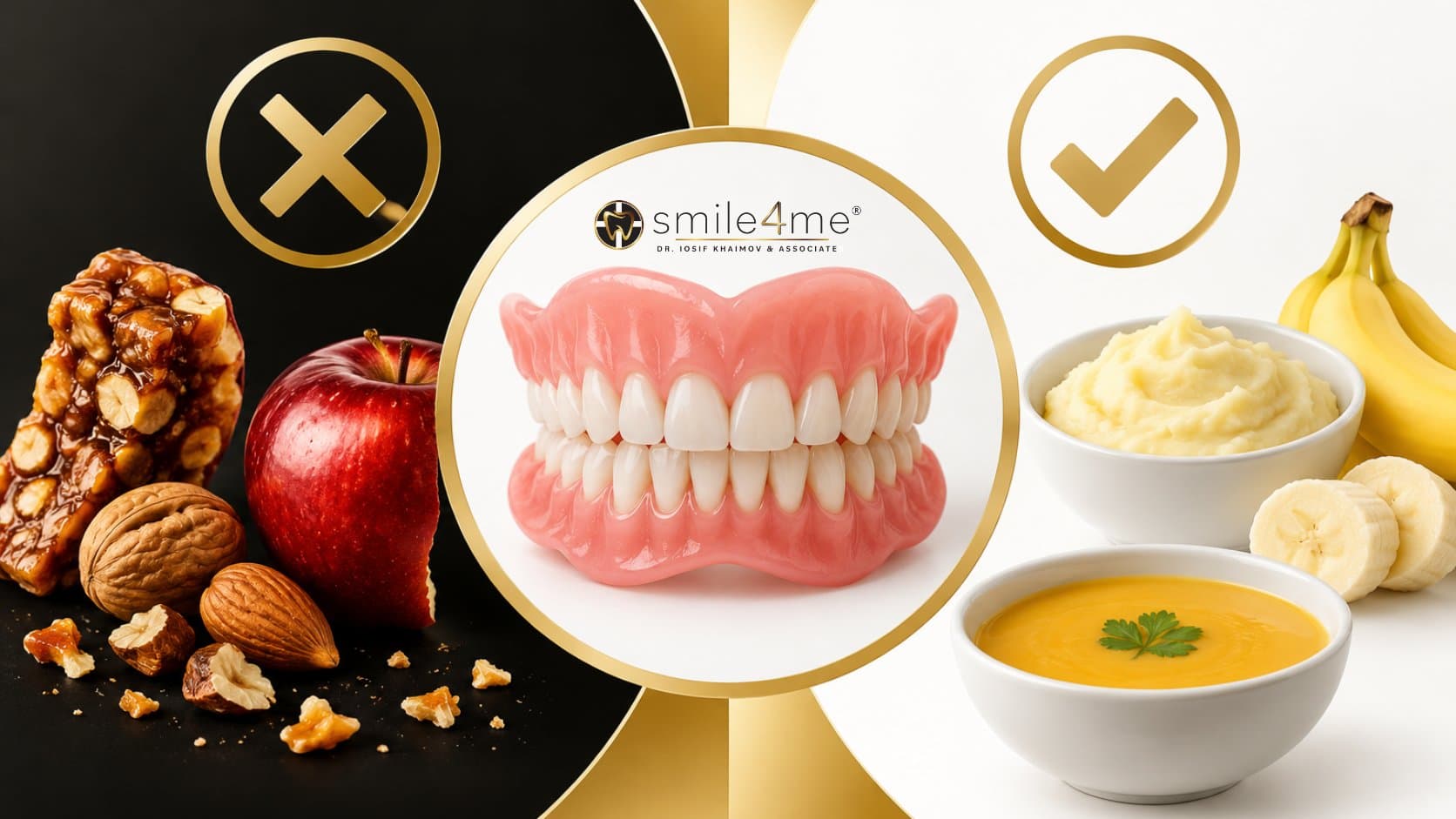
Yes, you can eat with dentures, and most patients return to a varied, satisfying diet within a few weeks. The first stretch feels different because a removable prosthesis rests on your gums instead of anchoring into bone the way natural roots do. That single difference explains almost everything about how eating changes, from the foods that stay off the menu to the small habits that make mealtimes feel normal again.
This guide walks through the adjustment timeline, which foods are safe and which cause problems, the chewing technique that keeps a denture stable, and when a stronger implant-supported option makes more sense.
How Dentures Change the Way You Chew
Chewing force is the part of the experience most patients underestimate before treatment begins. Natural teeth transfer pressure straight into the jawbone, which is why they handle tough, fibrous, and crunchy textures without complaint. Conventional full dentures generally restore about a fifth to a quarter of that original bite force, since the pressure spreads across soft gum tissue rather than a rigid root. Lower dentures usually feel less stable than upper ones, because an upper plate benefits from suction across the palate while a lower plate has to compete with your tongue and less surface area.
None of that means a limited life at the table. It means the strategy shifts from raw force to technique.
What the First Few Weeks Look Like
Adjustment happens in stages, and the timeline is more predictable than most patients expect. A soft diet for the first several days gives sore spots time to settle. Somewhere in the first two to three weeks, most people begin reintroducing firmer textures. Full confidence with a normal diet typically lands between three and six weeks, though patients with significant bone loss or a brand-new lower denture sometimes need a couple of months.
Sore spots during this window are normal, but persistent pain in one specific place is not. That's a fit issue, and a quick adjustment appointment solves it. Ignoring it can lead to ulcers, which is when a routine visit turns into a dental emergency in Astoria that could have been avoided entirely.
Foods That Work Well From Day One
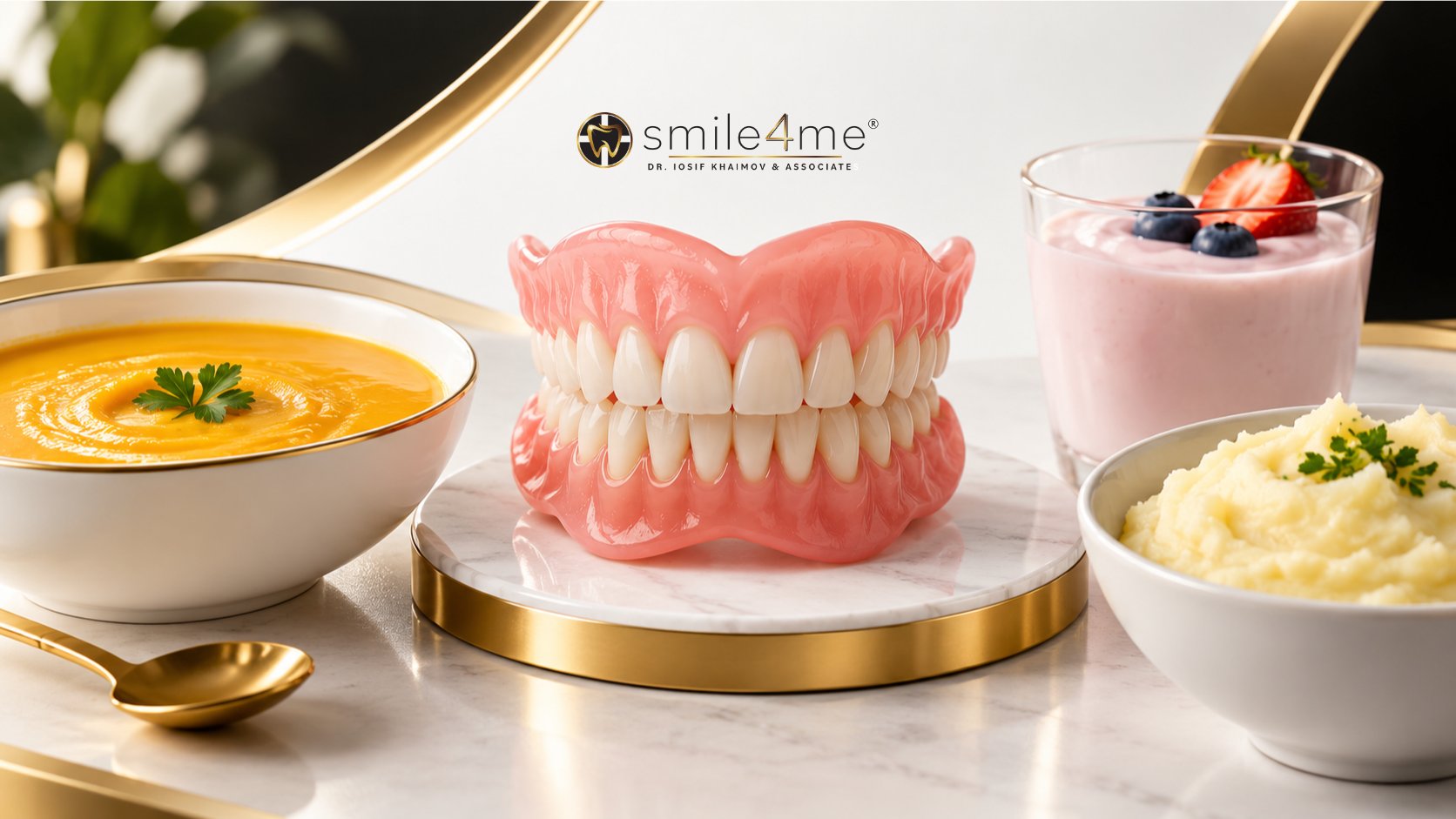
Soft, moist, protein-rich options carry you through most of the first week.
Eggs and Soft Fish: Scrambled eggs, omelets, salmon, and flaked white fish provide protein without requiring much bite force.
Cooked Vegetables: Steamed carrots, squash, green beans, and sweet potato mash keep nutrients in the diet while staying forgiving in texture.
Dairy and Smoothies: Yogurt, cottage cheese, and blended fruit drinks are easy on healing gums and simple to fortify with protein powder.
Slow-Cooked Meats: Stews, braises, shredded chicken, and pulled pork break down under low heat so your dentures don't have to do the work.
Grains and Legumes: Oatmeal, soft pasta, rice, lentils, and refried beans round out meals without crunch.
Patients recovering from extractions before their dentures are fitted often find the same list useful, and a longer roundup of gentle options after a tooth extraction covers that stage in more detail.
Foods to Avoid With Dentures
A short list of textures causes most problems, and most fall into four groups:
Hard and Crunchy Items: Nuts, popcorn kernels, hard candy, ice, and raw apples can crack an acrylic base or dislodge a plate mid-bite.
Sticky and Chewy Items: Caramel, taffy, chewing gum, and dense bagels pull dentures away from the gums and drag adhesive with them.
Small Seeds and Grains: Sesame seeds, poppy seeds, and quinoa slip beneath the plate and press into soft tissue, which is a common source of irritation.
Tough Cuts of Meat: Steak, jerky, and anything requiring sustained tearing puts uneven pressure on one side of the denture.
Very Hot or Very Cold Foods: An upper plate covers the palate and blocks the temperature feedback you're used to, so soup and hot drinks can burn before you notice.
Plenty of favorites survive with a small modification instead of a full ban. Cut corn off the cob, slice apples into thin wedges, dice raw vegetables, and pull bread apart rather than biting into it with your front teeth.
How to Eat More Comfortably

Technique matters more than willpower here.
Chew on Both Sides at Once: Splitting food between the left and right back teeth keeps the denture level instead of tipping it.
Use Your Back Teeth, Not Your Front: Biting straight down with the front teeth levers the plate loose, which is why corn on the cob and whole apples cause trouble.
Cut Everything Smaller Than Feels Necessary: Bite-sized pieces reduce the force each chew requires.
Drink Water With Meals: Moisture helps food clear the palate and reduces the friction that creates sore spots.
Rinse After Eating: A quick rinse removes trapped particles before they irritate gum tissue.
Taste often feels muted at first, particularly with an upper denture covering the palate. That sensation usually improves as your brain recalibrates over several weeks. Since older adults already face dietary shortfalls, it's worth leaning on herbs, citrus, and spices rather than falling back on convenience foods while flavor perception adjusts. The Dietary Guidelines for Americans note that more than 80% of Americans already fall short on vegetables, fruits, and dairy, so rotating cooked produce during the soft-food phase pays off.
When a Stronger Bite Is the Goal
Some patients simply want more chewing power than a removable plate can deliver. Implant-anchored options secure the prosthesis to the jaw rather than resting it on gum tissue, restoring a much larger share of natural bite force and eliminating the movement that makes hard foods risky. All-on-6 implants are one route for patients missing a full arch, and the tradeoff is a surgical process and a longer treatment timeline in exchange for eating without the mental checklist.
How Smile4Me Helps Patients Eat Comfortably Again

Dr. Iosif Khaimov, a New York University College of Dentistry graduate with more than seven years of patient care experience, builds denture plans in Astoria around how patients actually eat, not by handing over a plate and a pamphlet. That means fit adjustments during the break-in period, honest guidance on which foods are worth modifying instead of abandoning, and a clear comparison of removable and implant-supported options before deciding. Financing runs up to two years with 0% interest, so a stronger long-term solution stays on the table for patients weighing cost. Anyone searching for a dentist in Astoria who takes the eating side of tooth replacement seriously can reach the practice directly.
What to Expect Going Forward With Dentures
Dentures ask for a few new habits, not a smaller life. Cut portions, chew with your back teeth on both sides, keep water nearby, and the foods you actually care about can be back on your plate within weeks. The ones that don't are worth a conversation about implant-supported options, not quiet acceptance.
Call (718) 400-4400 or book an appointment with Smile4Me Dental Care on Steinway Street, and Dr. Khaimov will walk you through the fit adjustments and treatment options that fit how you eat. If you're dealing with a broken denture, sharp pain, or a sore that won't heal, emergency dental treatment in Astoria is available with same-day appointments where possible.
Frequently Asked Questions
How long does it take to eat normally with dentures?
Most patients handle a full range of foods within three to six weeks. The first week runs on soft foods, firmer textures return gradually over the following two weeks, and confidence builds from there. New lower dentures and cases with significant bone loss can take a couple of months.
Can you eat steak with dentures?
Tough cuts are among the hardest foods to manage with a conventional denture, but they aren't impossible. Choose tender cuts, cook them to medium rather than well done, slice against the grain into small pieces, and chew with your back teeth on both sides. Patients who eat steak regularly are usually better served by an implant-supported option.
Why do my dentures hurt when I eat?
Discomfort in the first days is normal as gum tissue adapts. Pain that persists past two weeks, or sharp pain in one consistent spot, points to a fit problem that needs an adjustment rather than more time. Trapped food particles and small seeds are another frequent cause.
Do you sleep with dentures in?
Removing dentures overnight gives gum tissue time to recover and lets you clean the prosthesis thoroughly. Soak them in a cleaning solution rather than letting them dry out.