
Most patients eat normally again about three to six months after All-on-4 dental implants, once the posts have fused to the jawbone and the final set of teeth is in place. Before then, you will move through several diet stages, starting with liquids for the first day or two and working up to soft and semi-soft foods over the following weeks. Your temporary teeth go in the same day as surgery, so you will be eating right away, but eating comfortably and eating without restriction are two different things.
At Smile4Me Dental Care, Dr. Iosif Khaimov guides All-on-4 patients through every stage of that transition. The timeline that follows reflects what most patients experience and what oral surgeons and implant dentists broadly agree on, with practical notes on where individual recovery tends to speed up or slow down.
What Eating Normally After All-on-4 Actually Looks Like
Returning to a normal diet is less about a date on the calendar and more about two separate healing events happening in your mouth.
Gum Tissue Healing
Your gums close over the surgical sites within the first two to three weeks. This is what controls early comfort. Once the tissue seals, chewing stops feeling tender and swelling settles down.
Osseointegration
The four implant posts need to bond with your jawbone through a process called osseointegration. Bone cells grow directly onto the titanium surface and lock it in place. This takes roughly three to six months and cannot be rushed by feeling good. You may feel completely fine at week four while the bone bond is still forming underneath.
Your Final Teeth
The temporary bridge placed on surgery day is designed for appearance and basic function, not for full chewing force. Your permanent prosthesis is fitted after osseointegration is confirmed. That final restoration brings full biting power, including foods like steak and raw apples.
The First 24 to 48 Hours: Cool Liquids and Purées
For the first day or two, stick to cool or room-temperature liquids and fully smooth foods that require no chewing. Blood clots are forming at each surgical site, and anything hot, hard, or suction-based can disturb them.
Reliable options in this window include lukewarm broth, protein shakes, smooth yogurt, applesauce, puréed soups cooled to room temperature, and mashed banana.
Two rules matter more than any food list during this phase:
No Straws: The suction pressure from a straw can pull a clot loose from the surgical site, causing pain and slowing healing.
Nothing Hot: Heat increases blood flow to the area, which worsens swelling and can restart bleeding. Let soups and drinks cool before they touch your mouth.
Chew away from the surgical areas where possible, and rinse gently with warm salt water after eating rather than swishing forcefully.
Days 3 Through 14: The Soft Food Phase

By day three, swelling usually peaks and then begins to fall, and you can move from purées to genuinely soft foods that break apart with light pressure from a fork.
Scrambled eggs, oatmeal, mashed potatoes, cottage cheese, well-cooked pasta, flaked baked fish, refried beans, and soft tofu all work well here. Many of the same soft foods that are easy to manage after oral surgery apply directly to All-on-4 recovery.
Protein intake deserves real attention in these two weeks. Bone and tissue repair both depend on it, and patients who drift into a diet of mostly carbohydrates and smoothies often report slower, less comfortable healing. Adding a protein source to every meal, even a soft one, makes a measurable difference.
Keep cutting everything into small pieces, and stay away from anything with seeds, grains, or small hard fragments that could lodge under the temporary bridge.
Weeks 3 Through 8: Adding Texture Back
Once your gums have closed, you can gradually return to texture. This is the longest and most variable stretch of the recovery, and it is where patient patience pays off most.
Start with semi-soft foods that need light chewing: ground meat, soft-cooked vegetables, canned fruit, rice, soft bread without a hard crust, and shredded chicken. Introduce one new texture at a time, not several at once. If something causes soreness or pressure, drop back a stage for a few days and try again.
Your goal is steady, even pressure. Bite with both sides of your mouth rather than favoring one, since uneven loading puts stress on individual implants while the bone bond is still developing. Dr. Khaimov reviews chewing patterns at follow-up visits for exactly this reason, because a habit formed during week four often persists long after healing finishes.
Keep hard, crunchy, sticky, and chewy foods off the table throughout this phase. That means nuts, raw carrots, hard candy, caramel, crusty bread, tough cuts of meat, and ice.
Months 3 to 6: Osseointegration and Full Function
Between the three and six-month mark, most patients reach the point where the question of how long after All-on-4 dental implants they can eat normally stops being theoretical. Your dentist confirms that the implants have integrated, the final prosthesis is fitted, and dietary restrictions largely lift.
Several factors shift where you land in that range:
Bone Density and Volume: Patients with strong existing bone integrate faster. Those who needed grafting or had significant bone loss before treatment usually sit at the longer end.
Smoking: Nicotine restricts blood flow to healing tissue and is the single most common reason implant recovery extends beyond six months.
Diabetes and Other Systemic Conditions: Well-managed conditions rarely cause problems. Poorly controlled blood sugar slows both gum healing and bone formation.
Compliance During Weeks 1 Through 8: Patients who return to hard foods early frequently need extra healing time, and in some cases risk implant failure.
Upper Versus Lower Jaw: The lower jaw is denser and typically integrates somewhat faster than the upper jaw.
Signs You Are Ready to Advance Your Diet
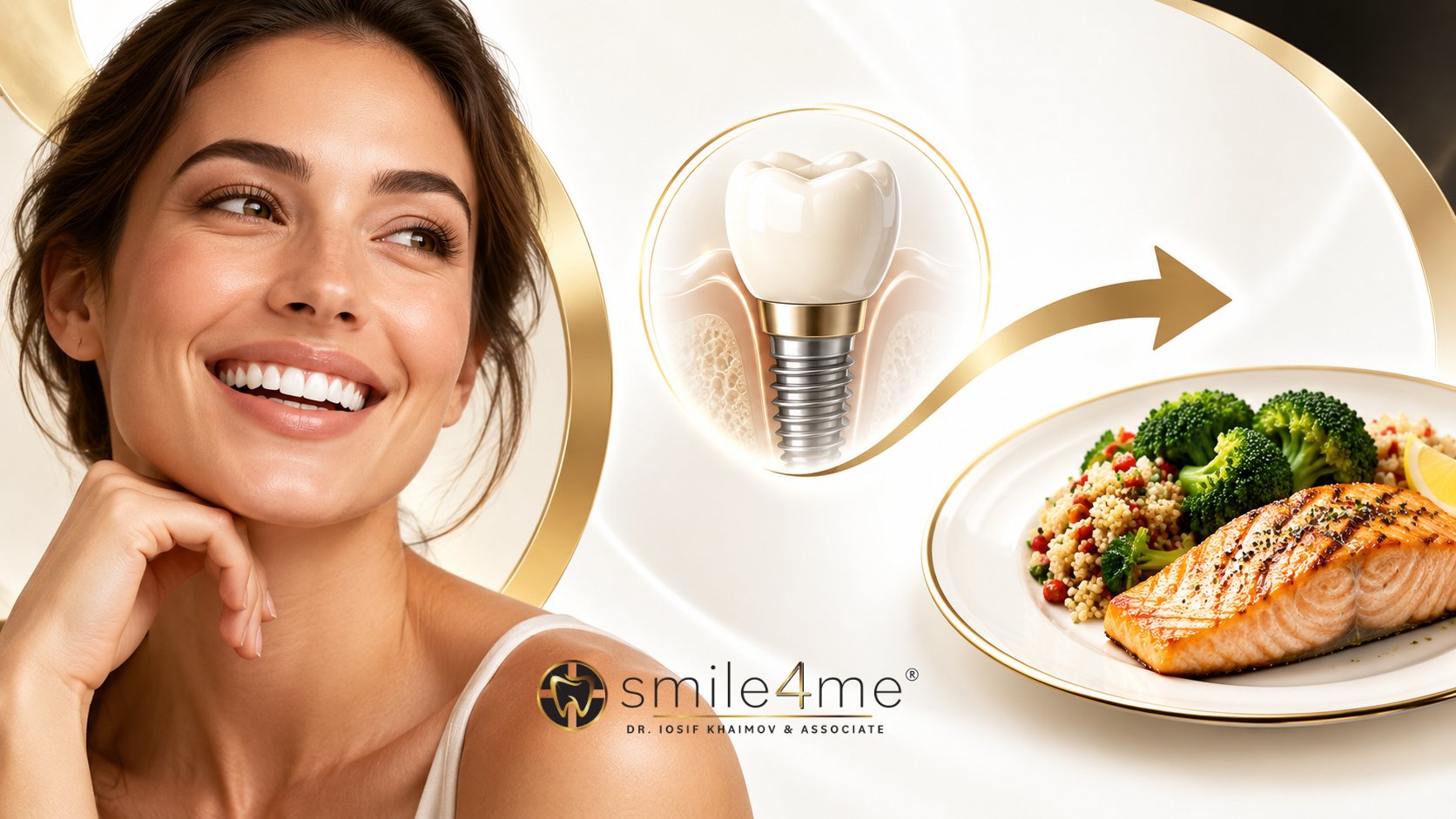
Rather than watching the calendar alone, watch for these signals before moving to a firmer stage:
No Pain When Chewing: Soreness after eating means the tissue is not ready for that texture yet.
Swelling Has Fully Resolved: Any lingering puffiness around the implant sites is a reason to wait.
No Movement Or Clicking: Your temporary bridge should feel stable and silent when you bite down.
Clean Follow-Up Exam: Dr. Khaimov checks integration progress at each visit, and that assessment should always outweigh how you feel on a given day.
If any of these are off, stay where you are for another week. There is no advantage to advancing early, and there is real risk in doing so.
Common Mistakes That Set Recovery Back
Most complications we see in All-on-4 patients trace to a small handful of avoidable habits.
Skipping the transition stages is the most common. Feeling good at week three is not the same as being healed at week three. Chewing only on one side is a close second, because it concentrates force on two implants instead of four. Using straws past the first week, smoking during healing, and neglecting cleaning around the temporary bridge round out the list.
Cleaning matters more than most patients expect. Food trapped beneath a temporary prosthesis irritates healing gum tissue and raises infection risk. A water flosser on a low setting, used gently, handles this far better than brushing alone. The same principles carry into long-term implant care after your final teeth are placed.
When to Call Your Dentist
Some discomfort in the first week is expected. These signs are not, and warrant a call the same day:
Pain That Increases After Day Three: Post-surgical discomfort should decline steadily. Rising pain suggests infection or a disturbed site.
Bleeding That Does Not Stop: Light oozing in the first day is normal. Active bleeding beyond that is not.
A Loose Or Shifting Temporary Bridge: Movement means the prosthesis needs attention before it stresses the implants.
Fever Or Discharge: Both point to infection and need prompt treatment.
A Bad Taste Or Persistent Odor: Often the first sign of trapped food or an infected site.
If something goes wrong outside normal hours, you can reach an emergency dentist in Astoria at our office instead of waiting for your next scheduled appointment. Same-day availability is often possible for implant patients.
How Smile4Me Supports You Through All-on-4 Recovery
Dr. Iosif Khaimov, an NYU College of Dentistry graduate with over seven years of patient care experience across multiple NYC practices, plans and places every All-on-4 case at Smile4Me Dental Care himself. That continuity is what makes the diet timeline in this guide something we can actually hold patients to, rather than a handout.
Full-Arch Care In-House: Scans, surgery, healing checks, and the final prosthesis all happen at one office, so the dentist assessing your integration at week six is the one who planned your case.
A Timeline Built On Your Jaw: Patients who needed grafting follow a different schedule than those with dense bone in both arches, and Dr. Khaimov tells you which end of the three-to-six month range to expect before surgery day.
Follow-Up That Catches Problems Early: We check bite pressure, prosthesis stability, and tissue healing at each visit, which is where uneven chewing habits and trapped-food irritation surface before they cost you healing time.
Treatment You Can Plan Around: Financing runs up to two years at 0% interest, so your recovery follows your mouth's schedule. You can book online, and the office is a five-minute walk from the Steinway St subway station.
Getting Started With All-on-4 Implants in Queens NY
Recovery goes best for patients who know what to expect at each stage and have a dentist who checks in along the way. Dr. Iosif Khaimov, an NYU College of Dentistry graduate with over seven years of patient care experience, plans All-on-4 treatment in Astoria around your bone structure, health history, and daily life, then walks you through the diet timeline in detail before surgery day.
Smile4Me Dental Care is located on Steinway Street, a five-minute walk from the Steinway St subway station. If you have been researching full-arch implants and want a straight answer about your own timeline, our dentist in Astoria is glad to talk it through.
Book an appointment or call (718) 400-4400 to schedule your All-on-4 consultation.
FAQs About Eating After All-on-4 Implants
How long after All-on-4 dental implants can I eat normally?
Roughly three to six months, timed to when your implants have fused to the jawbone and your final prosthesis is fitted. Soft foods start around day three, and texture returns gradually across weeks three through eight.
Can I eat solid food with my temporary teeth?
Soft solids, yes. Your temporary bridge handles gentle chewing but isn't built for full biting force, so save hard and crunchy foods for the final restoration.
What happens if I eat hard food too early?
You risk disturbing the bone-to-implant bond, damaging or dislodging the temporary bridge, and extending your overall healing time. In some cases, early loading contributes to implant failure.
Do I need to avoid coffee after All-on-4 surgery?
Skip it for the first two days because of the heat, then reintroduce it lukewarm. Hot liquids increase swelling and can restart bleeding at the surgical sites.
Will I lose weight during All-on-4 recovery?
Some patients do, particularly in the first two weeks. Prioritizing protein-rich soft foods and liquid nutrition supplements keeps intake steady while chewing is limited.
How long does the whole All-on-4 process take from start to finish?
Surgery and temporary teeth happen in one day. Final teeth are placed after osseointegration, so the full process typically spans three to six months. The timeline and cost of implant treatment are both worth discussing at your consultation, since financing with up to two years at 0% interest can change what's realistic for many patients.